


When he started flying unmanned aircraft in combat, “Ray” was flying some of Ukraine’s earliest mid-range strike drones, on missions of about 100 kilometers with a warhead about the weight of a bowling ball.
Now many of the weapons he works with are small, cheap cruise missiles that fly deep into Russia and Russian-occupied Ukraine, hitting everything from air defense systems to natural gas terminals and oil refineries.
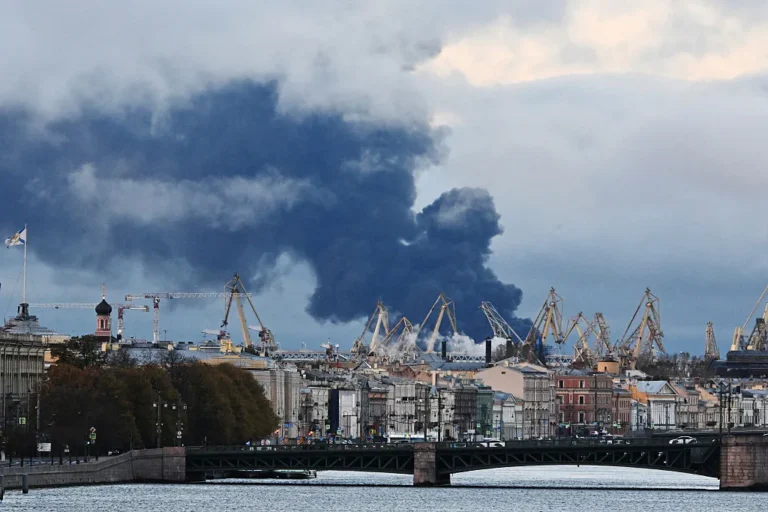
The transformation in striking power is down to evolving Ukrainian manufacturing prowess — but also complex mission planning using detailed maps, satellite photos from western partners that show Russian air defenses, a robust intelligence network and even energy industry veterans, whose expertise identifies weak spots in production facilities. In one strike in September, Kairos and other units set fire to an oil refinery on Moscow’s doorstep.
“We had to get the latest satellite images, not just for the strike target, but retrospectives to compare changes that had happened with time, and thereby crystallize the elements that we needed to strike,” said Ray, a lieutenant colonel and commander of the Kairos deep-strike battalion. He is being identified by his call sign, as his identity is sensitive for security reasons.

Ukraine’s ability to pummel targets well inside Russia has increased dramatically even compared to last year. But with a frigid winter fast approaching, its air and missile defenses are running low, and relations with the US — once its biggest supporter — are at low ebb, with President Donald Trump and President Volodymr Zelenskyy exchanging barbs in recent weeks.
Strikes inside Russia cannot use SpaceX’s Starlink systems for communication, as the service is shut off inside that country. All kinds of mechanisms have been used to facilitate strikes that go beyond the radio horizon, but no alternative has proved as effective or easy as strapping a Starlink terminal onto an airframe. Weapons that a pilot steers remotely to the target are drones, while those that are programmed to fly to a certain location are cruise missiles.
This is also why strikes in Russian-occupied Ukraine have a higher rate of success than deep strikes and return useful footage to their pilots until just before impact. On the evening of the recent Starlink speed throttling, Ray recalls that Kairos’ drones over occupied Ukraine “simply dropped out of the sky.”
Ukraine recorded no limits on the speed of its SpaceX Starlink terminal connections in overnight testing, a person familiar with the matter said on Saturday.
Ukraine’s sustained campaign of drone and cruise missile strikes is most likely the largest in history; Moscow’s Defense Ministry regularly tallies hundreds of Ukrainian weapons in Russian airspace nightly. Although Russia maintains an advantage in ballistic missiles like those that thunder down on Ukrainian cities, Kyiv has largely leveled the playing field in terms of volume with the near-constant strikes into Russia.

Kairos also conducts many drone strikes within Ukraine’s official border with Russia, missions that were enabled after Ukraine’s Defense Ministry early this year negotiated a “white list” of sorts with SpaceX that blocked Russian access to Starlink terminals and allowed Ukrainians to fly drones across Russian-occupied Ukrainian territory.
Ray says his unit was the first to plan and execute a strike campaign against tankers in the Azov Sea, hitting 60 ships in the course of a month.
Kairos has been successful enough to be upgraded from a battalion to the Unmanned Systems Forces’ 7th Separate Center — a larger command with hundreds of soldiers that can oversee other units. The unit’s growth coincides with the mass expansion of strikes on Russian oil refineries, gas terminals and tankers in the Black Sea, and military targets. The Unmanned Systems Forces tallied 7,000 drone strikes in the theater over the course of this summer’s operation to isolate Crimea, Ray said.
Ray said that with more funding and resources, Kairos could do even more.
“Especially in Crimea, throughout the sea, we can work seven times more,” he said.
A similar upgrade happened to the 14th Separate Regiment, which originated much of Ukraine’s deep-strike work and is now the 1st Separate Center.

The impact of the units’ deepest strikes has become evident in Russia’s economy, where consumers must grapple with shortages and rising prices, and its biggest companies struggling to produce. Data centers taken offline complicate Internet traffic and commerce.
Even so, Ray and his analysts are often left combing social media as well as intelligence sources on the ground to evaluate their attacks’ success.
“After launch until the moment of strike we’re waiting on our results from different sources — Telegram channels from the Russian populations negligent enough to film,” Ray said. “And also people on the ground, digital hacks, cyber intel. This is all used by us not just to prepare the mission but to evaluate our results.”
