


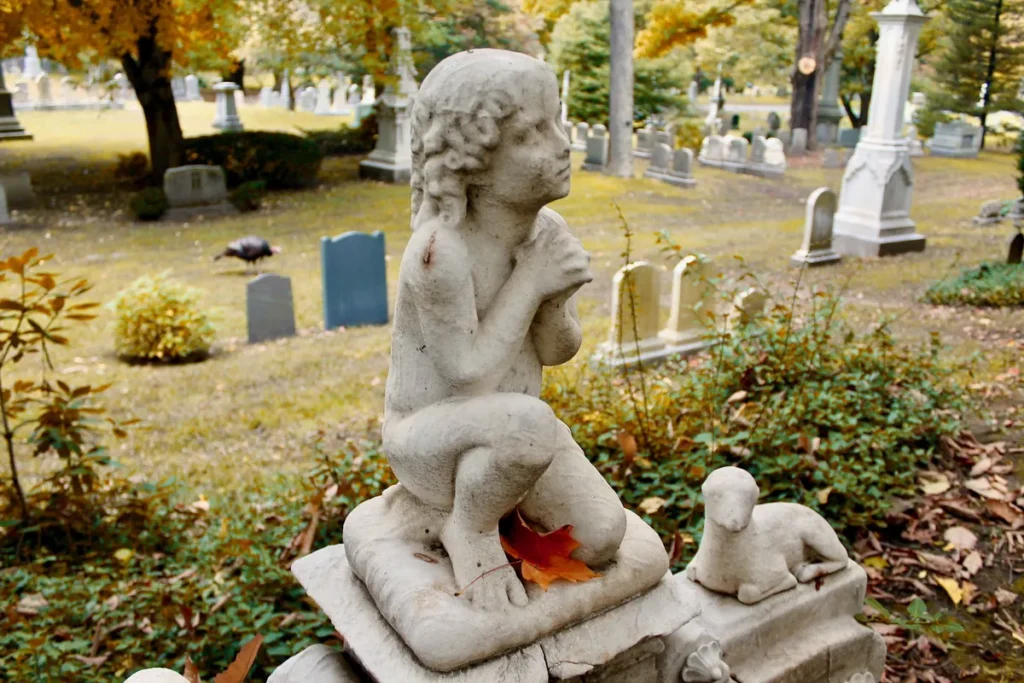
At a ribbon-cutting for a new visitor center at Mount Auburn cemetery last month in Cambridge, Massachusetts, a platoon of workers in tidy dark green pullovers posed for pictures alongside board members and local politicians, just inside the stately Egyptian Revival main gate, built of local granite in 1842.
The event organizers hoped the message would be clear: This place is more than a burial ground. It’s a civic amenity whose park-ranger-like staffers are here to welcome visitors to enjoy all kinds of activities. Not just birdwatching or botanical walks, either. Mount Auburn has recently hosted yoga, string quartet concerts, movie nights, dance performances and a sunset sound bath among the tombstones and mausoleums.
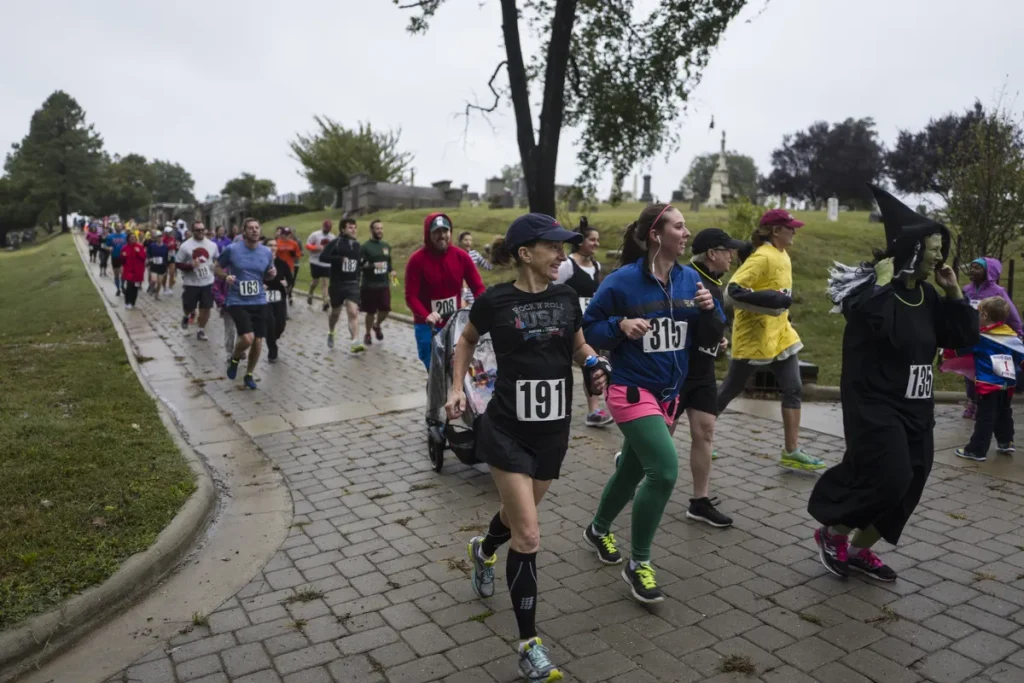
Other cemeteries similarly strive to attract visitors other than those who come to remember the departed. The offerings have gone far beyond Halloween graveyard tours and kids’ scavenger hunts and now includes immersive sound-and-light shows, 5K races, weddings and tequila tastings.


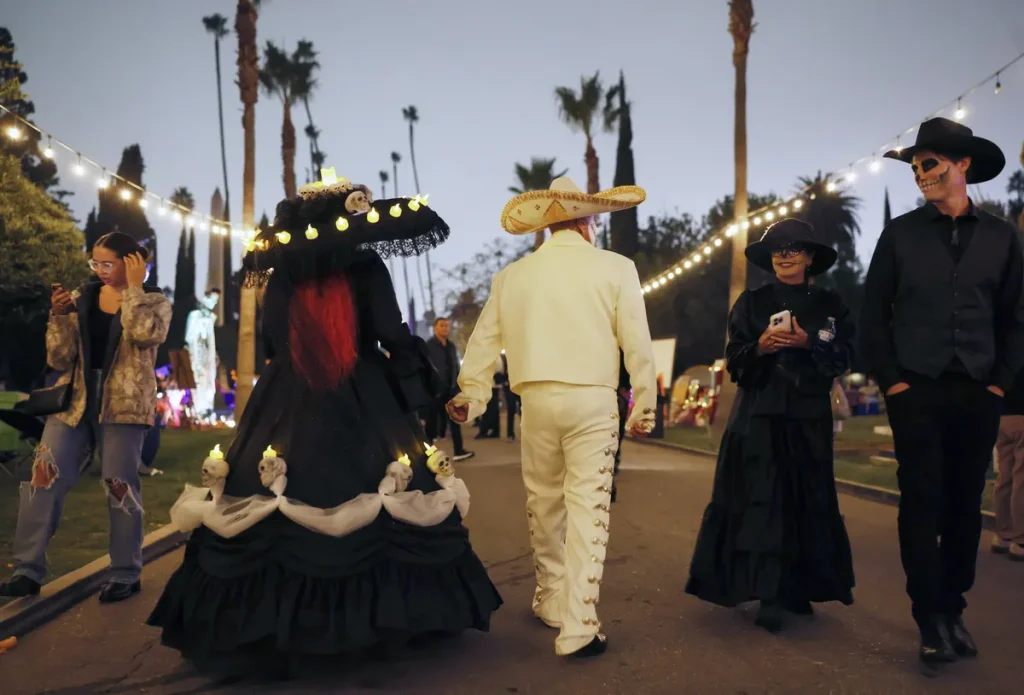
The unconventional programming is part of a growing trend at historic cemeteries in North American cities. In a 2019 analysis, the Project for Public Spaces identified six “multi-use cemeteries” that actively encourage “ways to bring the living and the dead together for more than a funeral.” Congressional Cemetery in Washington, DC, is selling access to a dog park; Hollywood Forever Cemetery in Los Angeles hosts an annual Día de los Muertos celebration that attracts thousands.
Attempts to make the cemetery a destination again echo their original role: More than a century ago, these spaces served as precursors to public parks. Today, with waning demand for conventional burials, cemeteries are welcoming other kinds of patrons both as a means of bringing in much-needed revenue and an exercise in marketing. The hope is that, after a day of walks, talks or concerts at the local cemetery, some visitors might reconsider putting down a down payment for a plot of their own.
A Rural Retreat
One basic question lies at the heart of this back-to-the-future experiment: While many cemeteries are on prime real estate with sylvan landscapes and extraordinary views, do people really want to spend their weekends sauntering among those six feet under?
More will if they give it a chance, says Mount Auburn executive director Matthew Stephens.
“People often arrive with preconceived notions of what a cemetery should look and feel like, only to find themselves surrounded by extraordinary beauty, towering trees, birdsong, wildlife, art and history,” he said. The cemetery’s 140,000 annual visitors, including tourists seeking out Boston-area historic attractions, “are surprised by the sense of vitality and connection they experience here.”
Nearly 200 years after it opened, he added, “we continue to challenge expectations of what a cemetery is and what it means to those who visit.”

Founded in 1831 in collaboration with the Massachusetts Horticultural Society, Mount Auburn was an urban pioneer. While informal graveyards and anonymous “potter’s fields” emerged in colonial times — one of the most infamous examples being the creation of Washington Square Park in New York City — small cemeteries, often in churchyards, became cordoned-off land deemed sacrosanct. Many survive to this day, such as King’s Chapel burial ground in Boston, today a prominent stop on the city’s Freedom Trail.
Those graveyards became overcrowded and disorderly, however, leading to public health concerns about disease and water contamination. That led civic leaders and urban planners to launch the rural or garden cemetery movement in the early 19th century, establishing burial grounds on the outskirts of cities, with a more intentional landscape design of rolling hills, water features and winding paths. These places, modeled after European examples like Paris’s Père Lachaise, were ringed by stone and iron fences and adorned with monumental gates and Gothic Revival structures.


Though built to be large enough to accommodate future plots, 19th century rural cemeteries were quickly surrounded by urbanization. But that also made them readily accessible, by horse and carriage initially, and their designers intended them to be used for leisure and recreation in cities that otherwise lacked green space. Notable garden cemeteries such as Green-Wood in Brooklyn, Laurel Hill in Philadelphia, Forest Lawn in Buffalo, Graceland in Chicago, and Bellefontaine in St. Louis became popular spots for Sunday strolls and picnics.
On a recent sunny Sunday afternoon, Mount Auburn was ably performing its historic role. The new welcome center at the main gate is mostly a gift shop, offering books such as Birds and Birding at Mount Auburn Cemetery and The Art of Commemoration and America’s First Rural Cemetery. A steady stream of people set out on foot to explore the property’s 175 acres. Some dropped in on a lecture on Henry David Thoreau, tagged along for a mindfulness nature walk, or witnessed a dance performance honoring pioneering women buried there. Several reported seeing a pair of great horned owls among the blazing colors of sugar maples and scarlet oaks.
“I have a friend who brings dates here,” said Peter Slattery, a researcher at MIT who came equipped with a tidy backpack. “It’s beautiful. I enjoy the serenity.”
Fall really brings out the crowds, said Jim Gorman, a longtime visitor services employee who was handing out maps and answering questions about the location of monuments, trees and birdwatching hotspots. Some came over after watching rowing teams compete in the Head of the Charles Regatta, a three-day rowing competition held nearby. People love meandering around and climbing to the top of Washington Tower for the expansive views of the Boston area, he said.
One inherent problem in the effort to open up cemeteries to different activities is the common prohibition against all the things that visitors are not allowed to do. A sandwich board at Mount Auburn lists several restrictions, including no bikes, scooters, or rollerblades; no running or jogging; no picnicking; and perhaps most challenging — no pets.
Stephens said that leadership is “continually exploring ways to make Mount Auburn more welcoming and accessible,” but added that “our cemetery mission will always come first.”
Recreation and Respect
Staying true to the primary function of being places of remembrance has been a challenge at some locations. After the Lake Lawn Metairie Cemetery in New Orleans started hosting the NOLA Dogs Race to the Rescue 5K road race, letter-writers to the Times-Picayune complained that tight shorts, cheering, and pounding feet all showed a lack of reverence and respect.
“In those instances you may always have pushback from the descendant community that just says, ‘You shall not use this land for anything but burying dead people,’” said Ryan M. Seidemann, an archaeologist and lawyer who teaches about cemeteries at LSU New Orleans and Arizona State University and is author of Cemetery Protections in Urban Environments.
As a form of land use, cemeteries have a permanence that is uniquely resistant to alteration, Seidemann said. Unlike abandoned factories, they can’t readily be transformed into new uses; after decades of fending off any incursion to make way for a highway or a subway tunnel, for example, operators of cemeteries cannot sell off portions of their property for development. Typically, they are stuck with what they are. (Not so in land-scarce Singapore, which has relocated historic cemeteries to build roads and housing projects.)
The garden cemetery’s heyday was relatively brief. After the Civil War, the sheer number of fatalities prompted the development of national cemeteries, on vast lawns with rows of orderly headstones that had no pretense of being a park. At the same time, landscape architects such as Frederick Law Olmsted established the public park as an essential oasis in urban areas — open areas for recreation and walking similar to the landscapes of garden cemeteries, but without the dead people.
Today, changing norms have made these sanctuaries a kind of historical relic. Some historic cemeteries have reached capacity, but even those with land left to sell future plots face a business model under severe strain. Due in part to concerns about expense — a full casket interment can easily cost $20,000 — only about one-third of American deaths result in casket burial. Many families now favor other ways to memorialize their loved ones that don’t use land at all, like scattering ashes over land or sea, or environmentally friendly methods such as green burials, natural decomposition or human composting, which don’t require the formal structure of a cemetery. Abandonment and neglect stalk many older cemeteries — particularly historic burial grounds of African Americans.
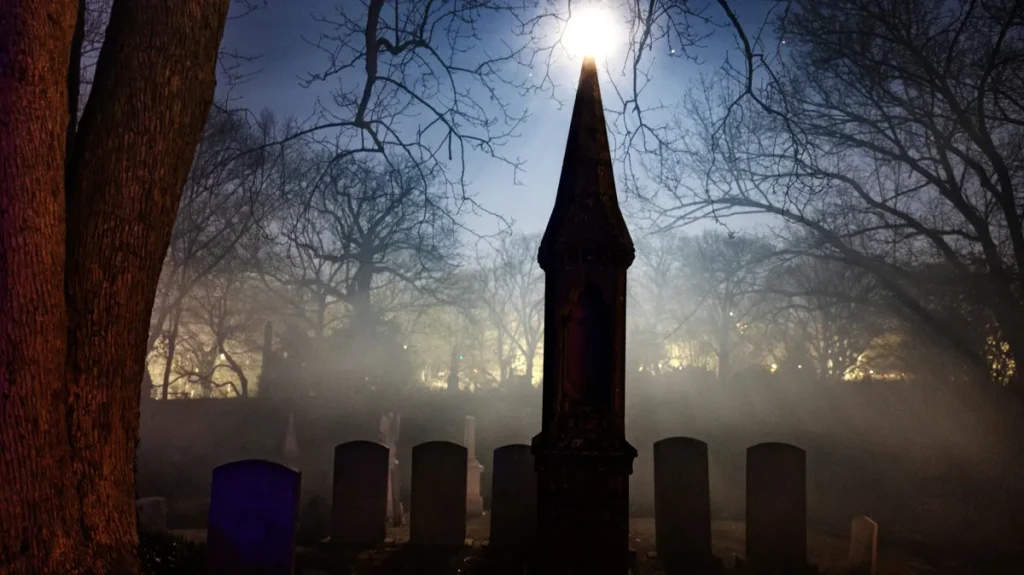
So it is that cemeteries risk literally becoming a dying industry, joining record stores, payphones, travel agencies and newspaper boxes as antiquated features of the landscape. The verdict isn’t in yet on whether the effort to reclaim their 19th-century role is paying off. A national report released earlier this year, “A Grave Affair: The State of Cemetery Tourism & Programming,” prepared by public historian and deathcare consultant Ashlynn Rickord Werner, noted a modest uptick in visitors at the nearly two-thirds of US cemeteries that reported they had ramped up new activities. But the same survey found the events brought in minimal revenue, amid continuing struggles to maintain staff.
With the economics only projected to darken further, the reimagining of places like Mount Auburn is a sensible path forward, said Tanya Marsh, professor at Wake Forest Law School, host of the podcast “Death, et seq,” and author of The Law of Human Remains.
“I’m personally in favor of diversifying community use of burial places, emphasizing their value as green spaces and giving them the much-needed revenue,” she said.
Insolvency, closure and eventual destruction would be the worst possible outcome.
“I don’t think it’s in anyone’s best interest for burial places to become decrepit or abandoned,” as that would create a whole new set of environmental problems and safety hazards, she said. Not to mention, she added, “it is disrespectful to the dead.”
